Professional pest control services in Albuquerque safeguard high-desert properties against venomous arachnids, wood-destroying insects, and seasonal rodent intrusions. Properties near the Sandia Foothills and the Rio Grande corridor encounter distinct insect pressures dictated by elevation, soil moisture, and stucco architecture.
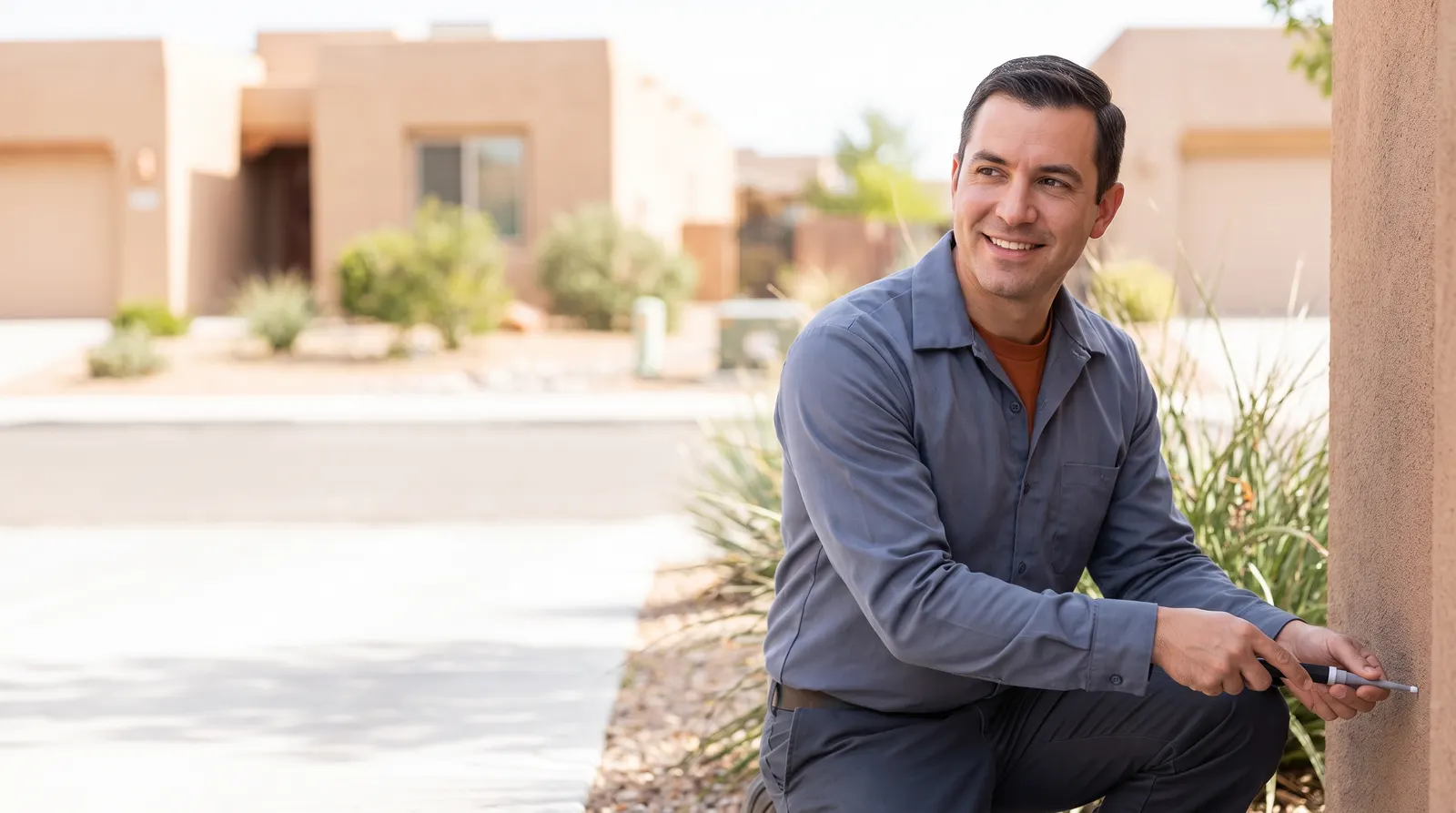
A pest control services company in Albuquerque is an extermination and biological exclusion service that eliminates desert arthropods, subterranean termites, and foraging rodents from residential and commercial structures across Bernalillo County.
Every service reflects the same meticulous attention to detail, whether it's a single job or a larger pest control services project across Albuquerque.
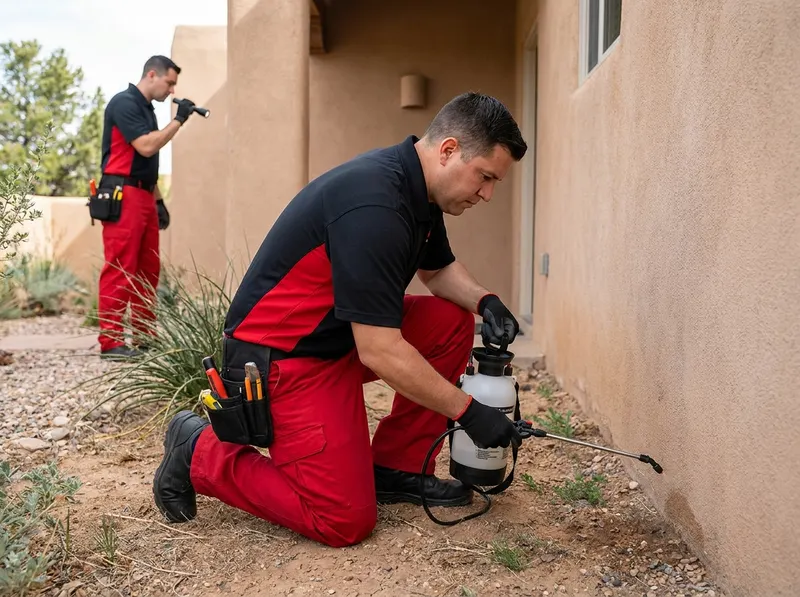
Quarterly and bi-monthly exterior defense treatments establishing continuous microencapsulated barriers against crickets, earwigs, cockroaches, and desert ants along structural foundations. Technicians apply a three-foot vertical and three-foot horizontal residual perimeter band around the foundation, clear cobwebs and spider egg sacs from exterior window recesses, and treat expansion joints where stucco connects to concrete flatwork. Formulations utilize UV-stabilized suspension concentrates that withstand ambient temperatures exceeding 100 degrees Fahrenheit without breaking down chemical bonds.
Get a quote →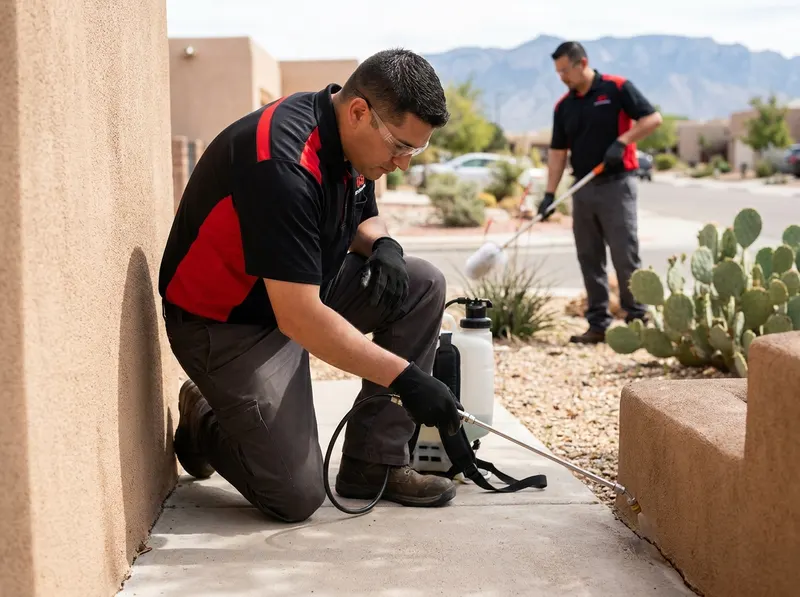
Targeted eradication protocols focused on bark scorpions, black widows, and desert brown spiders inhabiting decorative rock landscaping, block walls, and shaded foundation recesses. Specialized equipment introduces micro-crystalline dust compounds into cinder-block fence cores, stone retaining walls, and exterior utility box penetrations where arachnids shelter from daytime desert heat. Nighttime ultraviolet inspection audits locate active scorpion foraging populations around landscape borders, ensuring precise localized contact treatment that eliminates the reproductive population without broad chemical dispersion.
Get a quote →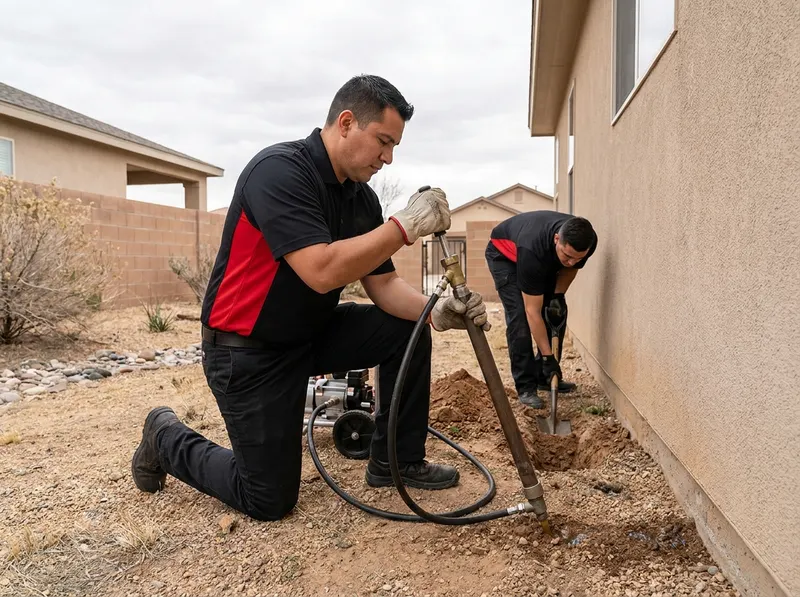
Liquid soil barriers and monitoring bait stations engineered to intercept arid-land subterranean termites moving upward through slab penetrations and stem walls. Non-repellent termiticide solutions are placed via trenching along exterior stem walls at a rate of four gallons per ten linear feet, binding securely to sandy loam and caliche soils. Sub-slab injection targets concealed expansion joints near plumbing rough-ins, halting Reticulitermes flavipes and Reticulitermes tibialis workers before structural timber framing, wall studs, or floor subflooring incur structural compromise.
Get a quote →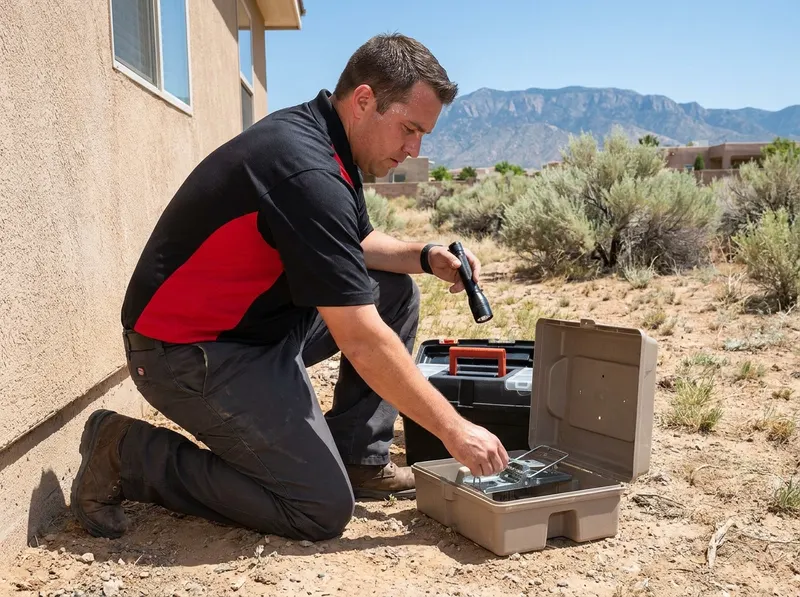
Interior mechanical trapping and exterior tamper-resistant baiting systems designed to eliminate house mice, deer mice, and roof rats without indoor odor risks. High-capacity, locked exterior baiting consoles are anchored along perimeter walls, foundation offsets, and arroyo edges to intercept foraging rodents before they approach building envelopes. Interior containment utilizes mechanical snap stations placed strategically along structural runways and utility pathways within crawlspaces, attics, and suspended ceilings, providing prompt eradication without secondary chemical risks.
Get a quote →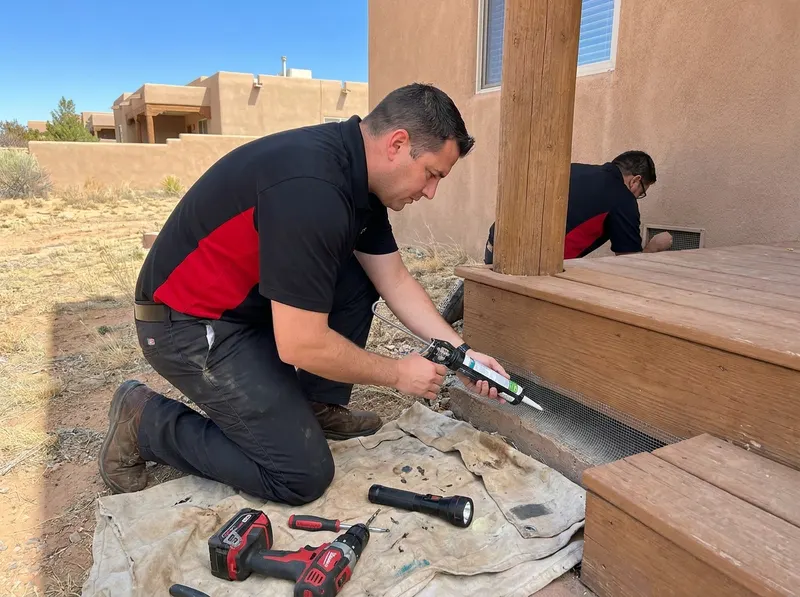
Physical structural fortification utilizing copper mesh, galvanized hardware cloth, and metal flashing to seal weep screeds, roof return lines, and crawlspace vents. Technicians seal gaps larger than one-quarter inch around copper water lines, gas line penetrations, HVAC conduit sleeves, and parapet transitions using chew-proof stainless steel fill fabrics and polyurethane architectural sealants. This comprehensive mechanical barrier denies entry to field mice, pack rats, and roof rats, eliminating structural dependency on perpetual rodenticide application.
Get a quote →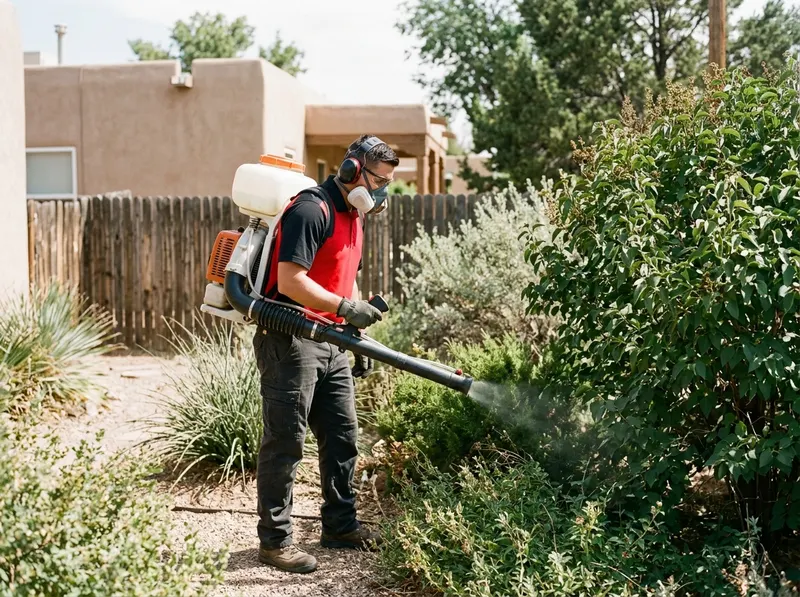
Automated residual misting and biological larvicide applications applied to shaded vegetation, irrigation basins, and standing water zones across river valley microclimates. Ultra-low-volume applications treat the undersides of dense foliage, shade trees, and landscape groundcover where adult Aedes and Culex mosquitoes rest during peak heat. Water features, drainage ditches, and acequia runoff zones receive Bacillus thuringiensis israelensis (BTI) briquettes that eliminate mosquito larvae naturally before they develop into biting adults.
Get a quote →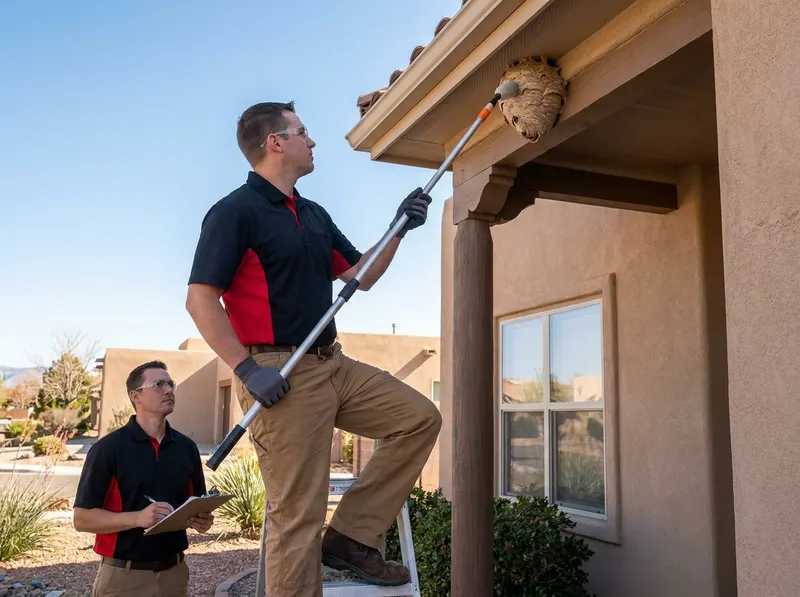
Aerosol knockdown and physical removal of paper wasp nests, mud daubers, and yellowjacket colonies from high stucco eaves, patio overhangs, and parapet walls. Technicians employ specialized telescoping applicator poles to treat nests suspended up to twenty-five feet above ground level, neutralizing defensive stinging insects instantly before scraping away paper and mud comb structures. Follow-up residual treatments to nesting sites deter fertilized queens from rebuilding colonies in the same structural overhangs during the following spring cycle.
Get a quote →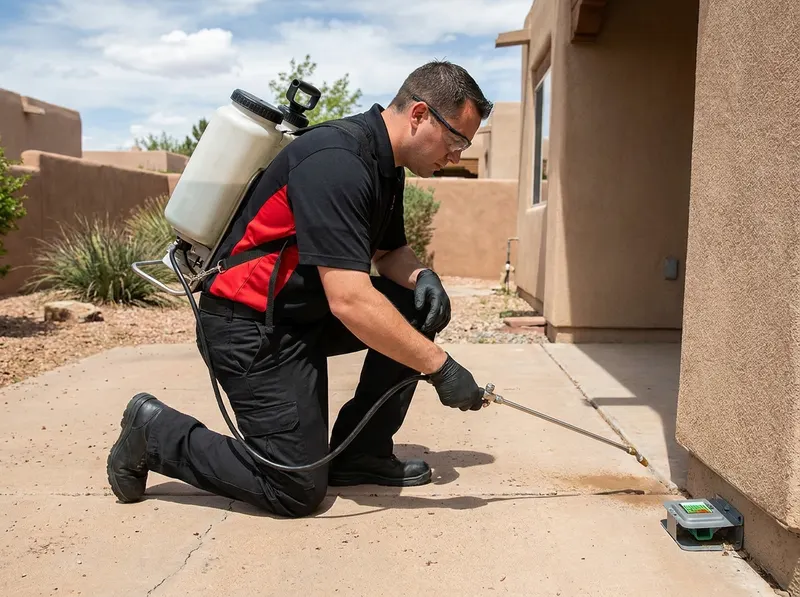
Non-repellent liquid transfers and species-specific baiting matrices targeting harvester ants, pavement ants, and carpenter ants at the subterranean colony level. Technicians introduce delayed-action carbohydrates and protein matrices that foraging worker ants carry back to deep underground nests, distributing active agents throughout the colony to eradicate reproductive queens. Exterior perimeter sprays utilize undetectable transfer active ingredients, allowing walking ants to unwittingly cross treated zones and contaminate nest mates through natural grooming behaviors.
Get a quote →You get a firm, itemized quote for your pest control services before any work begins, no surprises, no pressure.
Careful prep, tidy work, and a full cleanup when we are done. We treat your home and belongings like our own.
The same trusted, background-checked team from the first call to the final check.
Property owners facing localized desert pests must select protocols based on species biology, foundation style, and surrounding geography. If your property borders open open-space acreage near Petroglyph National Monument or the Sandia Foothills, choose perimeter microencapsulated barrier defense with weep-screed dusting; this halts wandering hunting spiders, bark scorpions, and centipedes before they cross exterior stucco thresholds. If your home sits on an irrigated lot in the North Valley or South Valley near the Rio Grande Nature Center State Park, prioritize subterranean termite baiting systems and rodent exclusion; elevated moisture levels foster active Reticulitermes termite colonies and roof rats that bypass surface perimeter sprays.
The operational trade-off is mechanical exclusion investment versus recurring topical maintenance: physical barrier sealing carries higher initial labor costs but prevents access indefinitely, whereas perimeter liquid bands provide rapid multi-month mortality against roving arthropods but require quarterly reinforcement under Albuquerque's intense ultraviolet radiation. Homes built on monolithic concrete slabs with zero crawlspace require different chemical delivery mechanisms than raised foundation adobe structures. Slab-on-grade architecture in Westside subdivisions like Taylor Ranch channels subterranean termites directly through plumbing penetrations and bath traps, necessitating localized sub-slab injection or targeted bait matrix grids placed along the perimeter footing.
In contrast, historic adobe or double-brick construction in Barelas and Old Town Albuquerque provides porous vertical pathways that shelter wood-boring beetles, subterranean ants, and roof rats, requiring breathable micro-mesh vent covers and deep void injections rather than heavy surface soil saturation that could compromise earthen masonry. If an infestation involves venomous species like the Arizona bark scorpion or Western black widow, relying solely on standard over-the-counter contact sprays introduces severe failure risks; these arachnids possess thick waxy cuticles and navigate vertical block walls without contacting treated horizontal floor surfaces. For arachnid control, exterior treatments must incorporate microencapsulated synthetic pyrethroids engineered with microscopic capsules that physically adhere to the spider's leg segments during travel, alongside structural dust formulations driven deep into concrete masonry unit (CMU) wall voids, weep screeds, and window trim casing.
Property managers managing multi-family units in Downtown Albuquerque or the University of New Mexico corridor must balance immediate knock-down speed with long-term low-toxicity exposure limits for tenants, prioritizing closed tamper-resistant bait stations and gel attractants over broadcast aerosol sweeps.
Every project gets a firm, written price after a free on-site visit. Ranges below for orientation.
Tell us about your pest control services job and we'll send a clear, written quote, usually the same day. Or just call and talk to a real Albuquerque pro.
(505) 552-3194
Albuquerque's dual microclimates, the dry, gravel-dominated terrain of the Foothills and Westside versus the dense riparian moisture along the Rio Grande, generate entirely distinct pest challenges. Foothills homes regularly face bark scorpions and black widows migrating out of natural arroyos, while North Valley properties experience relentless subterranean termite and rodent pressure fueled by shallow water tables and agricultural ditches. Furthermore, intense high-desert UV exposure degrades ordinary chemical sprays within weeks, necessitating microencapsulated formulations bonded specifically to survive alkaline stucco and caliche soil profiles. In older neighborhoods like Barelas, Old Town Albuquerque, and Downtown, historic adobe architecture, flat parapet roofs, and aging subterranean sewer infrastructures provide hidden nesting networks for American cockroaches, roof rats, and field mice seeking warmth when desert night temperatures plummet. Across elevated master-planned communities like High Desert and the Sandia Foothills, developments built directly into alluvial fan soils expose properties to aggressive harvester ant colonies, centipedes, and desert brown spiders that slip beneath garage door weatherstripping and crawlspace access panels. On the Westside and Taylor Ranch, windblown sand and expansive caliche clay lead to exterior foundation cracking where subterranean termites establish exploratory mud shelter tubes directly into structural wood framing. Effective high-desert pest management requires understanding these specific Bernalillo County geographical conditions, matching seasonal migration patterns with targeted structural barriers rather than relying on indiscriminate broadcast applications.
Free estimates for Albuquerque & the surrounding area.
 Vexlora Pest Management