Surface spraying fails against high-desert formicidae because fast-acting repellents trigger colony budding, causing a single nest to fracture into three or four autonomous satellite colonies within interior drywall…
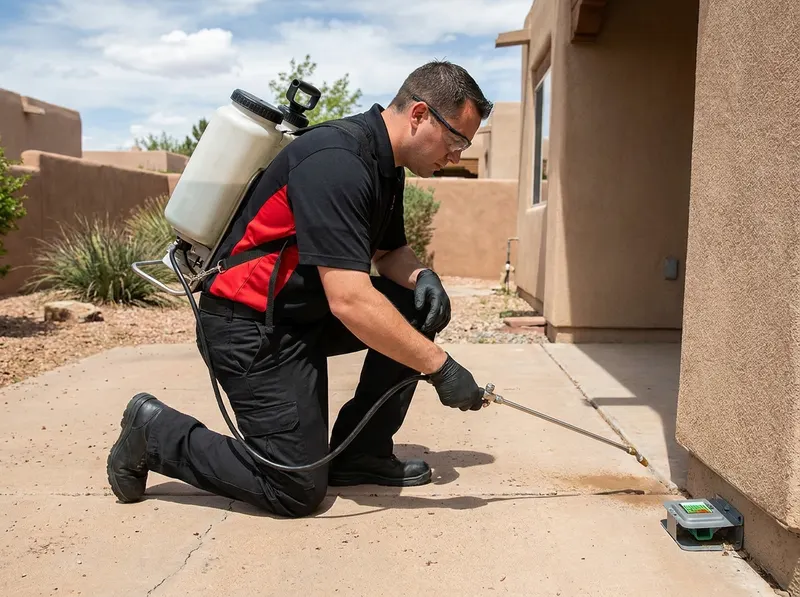
Surface spraying fails against high-desert formicidae because fast-acting repellents trigger colony budding, causing a single nest to fracture into three or four autonomous satellite colonies within interior drywall cavities. In Albuquerque, seasonal aridity drives foraging worker ants through hair-line thermal cracks common in stucco expansion joints, traditional adobe brick footings, and slab-on-grade concrete foundations. Odorous house ants and field ants seek interior plumbing voids in Nob Hill bungalows and Downtown Albuquerque lofts during hot summer spells, while red harvester ants excavate extensive subterranean labyrinths across undisturbed native soil in the High Desert and Foothills developments.
Eradication relies on slow-acting, non-repellent transfer chemistry engineered to exploit natural trophallaxis. Foraging ants ingest or carry microscopic doses of active agents back to deep underground chambers, transferring the lethal payload directly to egg-laying queens and nursery larvae before the compound activates. Liquid formulations applied along the exterior stem wall establish an invisible 10-foot behavioral transfer zone, while targeted interior gel baits resolve infestations nested behind kitchen tile backsplashes and bathroom wet walls without dispersing airborne chemical residues.
Property construction type determines the operational strategy. Adobe structures in the North Valley, South Valley, and Barelas retain significant core dampness that provides ideal sanctuary for moisture-loving carpenter ant satellites, demanding precise micro-injection into structural wood members. In contrast, newer construction across Taylor Ranch and the Westside frequently experiences pavement ant incursions along deep contraction joints and patio pavers, where high-pressure subterranean root treatments neutralize colonies entrenched beneath flagstone or pea gravel xeriscaping. Initial colony collapse typically occurs within 7 to 14 days, with zero disruption to household living spaces.
Every job gets a firm, written price after a free on-site visit.
Tell us about your ant colony elimination job in Albuquerque and we'll send a clear, written quote, usually the same day.
 Vexlora Pest Management