Rodent pressures in Bernalillo County follow precise ecological lines tied to geography and architecture. In riparian corridors near the North Valley and South Valley, dense ditch-bank foliage supports elevated…
Rodent pressures in Bernalillo County follow precise ecological lines tied to geography and architecture. In riparian corridors near the North Valley and South Valley, dense ditch-bank foliage supports elevated populations of roof rats that access attics by jumping from mature cottonwoods to flat roofs. Across the Foothills, High Desert, and along the volcanic escarpments of the Westside near Petroglyph National Monument, white-throated woodrats, commonly known as pack rats, target car engine bays, outdoor AC condensers, and crawlspaces. These rodents build middens made of cholla joints and debris, stripping insulation and chewing wiring harnesses, which creates genuine fire hazards in residential structures.
Controlling desert rodents requires distinct protocols depending on whether the building is modern frame construction or historic regional architecture. Traditional adobe properties in Barelas and Old Town Albuquerque feature thick, porous mud brick and dirt crawlspaces that allow mice to slip through gaps as small as a dime (1/4 inch). Modern stucco homes in Taylor Ranch and Nob Hill frequently have weep screed transitions and parapet roof returns where desert pack rats find harbor. Standard poison bait boxes placed along an exterior perimeter are insufficient for indoor invasions; poisoned rodents often die inside drywall cavities or vigas, creating severe odor issues in warm climates and secondary poisoning risks for local birds of prey.
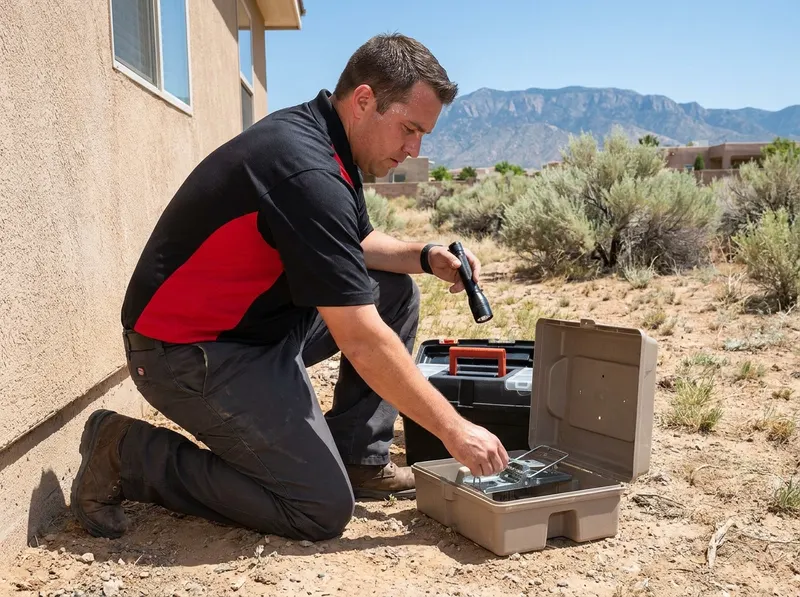
Mechanical trapping paired with physical exclusion forms the protective barrier required for high-desert properties. The protocol implements enclosed snap traps, direct runaway placement, and tamper-resistant stations placed away from domestic pets and young children. Once interior populations are trapped and cleared over a 7- to 14-day cycle, structural entry points are sealed using 1/4-inch galvanized hardware cloth, expanding polyfoam backing, and concrete patch compound. This seals the perimeter permanently against recurring seasonal migrations driven by dry summer heat or winter cold snaps.
Every job gets a firm, written price after a free on-site visit.
Tell us about your rodent control and trapping job in Albuquerque and we'll send a clear, written quote, usually the same day.
 Vexlora Pest Management